A Revolution in Understanding How We Learn
For centuries, scholars debated whether human behavior was shaped primarily by instinct or by experience. Then came psychologist Albert Bandura, who changed everything. Through his groundbreaking work in the 1960s, Bandura introduced Social Learning Theory, arguing that people learn not only through direct experience but also by observing the actions of others. His ideas transformed psychology, education, and organizational development alike, redefining what it means to “learn.” Social Learning Theory bridges behaviorism and cognitive psychology. It recognizes that while reinforcement and punishment influence behavior, so too do attention, memory, and motivation. Bandura’s insight was elegantly simple: we learn by watching, imitating, and modeling. Whether we’re mastering a new language, learning workplace etiquette, or picking up a social trend, we do so by observing others and evaluating the outcomes of their actions. Today, this theory continues to shape how educators teach, how leaders train, and how media influences society. From classrooms to boardrooms, from television screens to digital platforms, Social Learning Theory helps explain how ideas spread, norms develop, and individuals adapt.
A: It’s the idea that people learn behaviors by observing others and modeling what they see.
A: Psychologist Albert Bandura introduced it in the 1960s through his famous Bobo Doll experiments.
A: Because it activates both cognitive and emotional learning pathways simultaneously.
A: No, it happens anywhere people interact, including families, workplaces, and media environments.
A: Yes, which is why ethical and positive modeling is vital in education and leadership.
A: Learners imitate behaviors they see rewarded or valued by others.
A: Confidence built through successful modeling increases persistence and achievement.
A: Through video demonstrations, peer collaboration, and modeled instructor feedback.
A: Yes—by replacing them with positive models and conscious practice.
A: Observe someone who excels at a skill you want, imitate their process, then adapt it to your style.
The Origins of a Groundbreaking Idea
Albert Bandura’s path to developing Social Learning Theory began as a critique of strict behaviorism, which viewed humans as reactive organisms shaped solely by external rewards or punishments. Bandura observed that this model failed to account for the complexity of human learning. He proposed that cognition—the ability to think, reason, and reflect—played a crucial role.
His famous Bobo Doll Experiment in 1961 proved this point dramatically. In the study, children watched adults interact with a large inflatable clown doll named “Bobo.” Some adults behaved aggressively, striking the doll and shouting at it, while others acted calmly. Later, when the children were left alone, those who had observed aggression imitated it. The takeaway was profound: people could learn behaviors simply by observing, without direct reinforcement.
This finding challenged long-held beliefs and opened new perspectives on human development. It showed that the social environment, not just rewards and punishments, plays a critical role in shaping behavior. Bandura’s theory highlighted that learning is both social and psychological—a dynamic exchange between the individual, the environment, and the observed behavior.
The Core Components of Social Learning
At the heart of Social Learning Theory are four key processes: attention, retention, reproduction, and motivation. Each plays a vital role in transforming observation into action. Attention is the gateway to learning. We can’t imitate what we don’t notice. Attention is influenced by factors such as interest, relevance, and the observer’s mental state. A student is more likely to emulate a teacher they admire or respect, just as an employee may mirror a confident leader. Retention involves remembering what was observed. Learners must encode the behavior into memory, often by visualizing or mentally rehearsing it.
This explains why demonstration-based learning, videos, and modeling are so effective—they leave vivid mental imprints. Reproduction refers to the ability to perform the observed behavior. It’s one thing to understand how to swing a golf club; it’s another to physically replicate it. Practice refines the skill and closes the gap between observation and performance. Motivation determines whether the behavior will actually be carried out. People are more likely to imitate actions that they believe will be rewarded or socially approved. Conversely, if they see negative consequences, they may avoid those behaviors. Motivation links personal goals and values with social observation, making learning purposeful rather than passive.
Observational Learning in Everyday Life
Social Learning Theory explains a remarkable range of everyday behaviors. Children learn manners, social cues, and language patterns by observing parents and peers. Teenagers adopt styles and behaviors modeled by influencers or admired friends. Adults mimic workplace behaviors they perceive as successful or respected. Across all ages, we are natural observers and imitators, constantly scanning for cues on how to belong, achieve, or adapt.
In education, students learn more effectively when they see teachers model enthusiasm, curiosity, and resilience. In the workplace, mentoring programs thrive because employees watch seasoned professionals handle challenges and emulate their problem-solving approaches. Even in virtual environments, people learn through digital observation—watching tutorials, studying examples, and engaging in online communities.
Observation transforms information into experience. When people see others navigating real situations, they internalize lessons more deeply than through abstract instruction. This “vicarious learning” saves time, minimizes risk, and builds competence by showing—not just telling—how success looks in practice.
The Influence of Role Models
Role models are central to Social Learning Theory. They serve as living examples of behavior worth imitating—or avoiding. Bandura recognized that not all models are equally influential. Their effectiveness depends on status, competence, similarity, and warmth. We’re more likely to imitate people we admire, identify with, or perceive as successful. Positive role models inspire growth. A coach demonstrating perseverance teaches athletes to persist through setbacks. A teacher showing patience encourages empathy in students.
Conversely, negative role models can normalize harmful behaviors, especially when those actions appear rewarded or unpunished. This dual potential gives the theory enormous relevance in discussions about media, leadership, and parenting. In a connected world, digital role models—celebrities, content creators, influencers—wield unprecedented power. They shape trends, opinions, and even moral values. Social Learning Theory offers a framework to understand this influence and the responsibility that comes with visibility.
Self-Efficacy: The Confidence to Learn
Bandura extended his work with the concept of self-efficacy, the belief in one’s own ability to succeed in specific situations. This idea is deeply intertwined with Social Learning Theory. Observing others succeed can raise one’s self-efficacy, while witnessing failure—or facing criticism—can lower it.
When learners see someone like themselves mastering a skill, their confidence grows. This effect is especially powerful in educational and workplace contexts. For example, when students watch peers solve a math problem or employees see colleagues navigate new software, they are more likely to believe they can do it too.
High self-efficacy enhances persistence, creativity, and resilience. It shifts the learner’s mindset from “I can’t” to “I can try.” In this way, observation not only teaches skills but also builds the inner belief needed to apply them.
Social Learning in Education
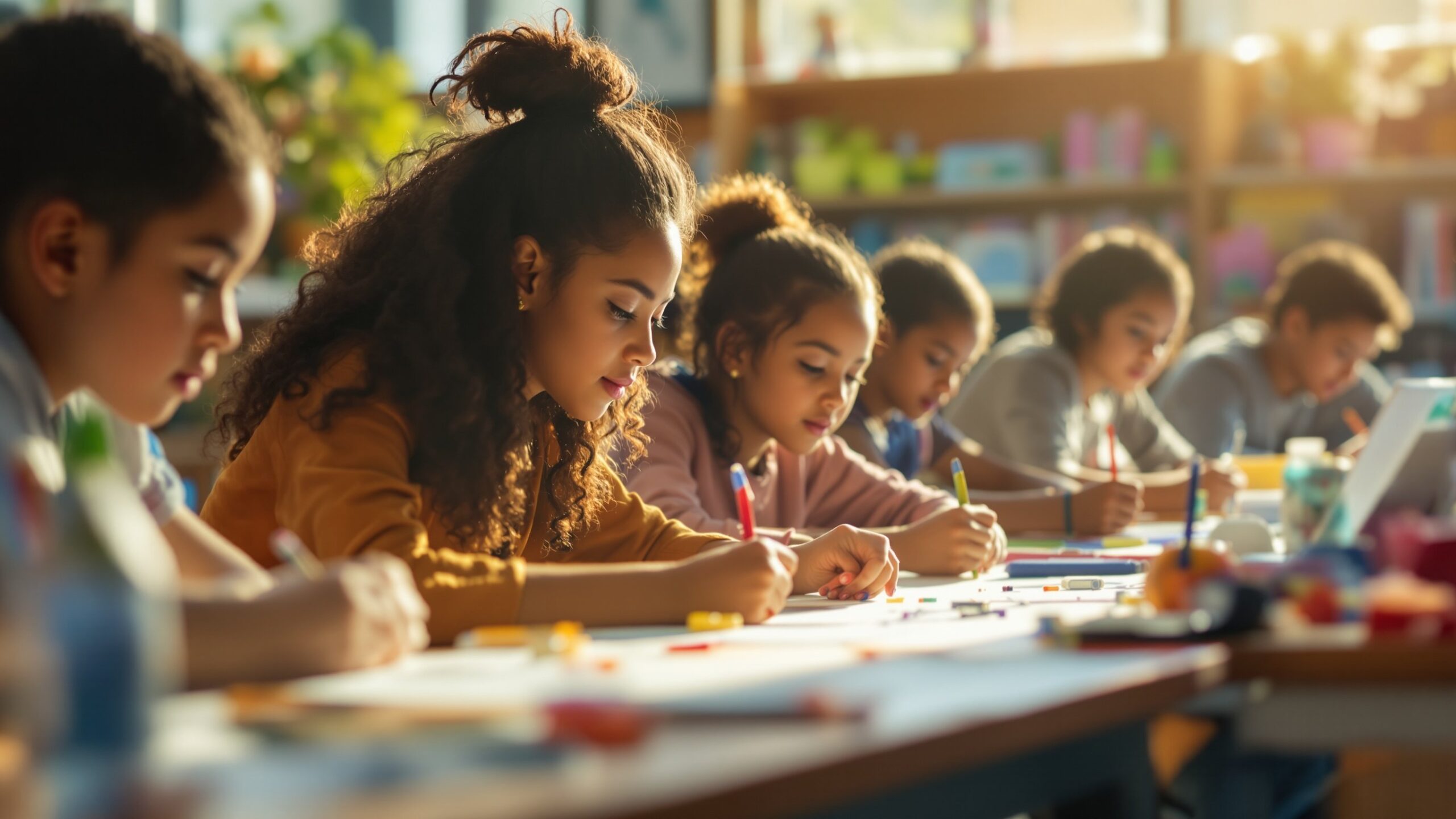
In modern classrooms, Social Learning Theory underpins many instructional strategies. Teachers who model curiosity, respect, and problem-solving create a culture of learning by example. Group projects, peer tutoring, and classroom discussions all thrive on observation and interaction. Students don’t just absorb academic content—they internalize behaviors like collaboration, empathy, and persistence. When they see teachers handle mistakes calmly or celebrate effort, they mirror those attitudes.
The classroom becomes a microcosm of society, where observation drives both intellectual and emotional growth. Digital learning has amplified these principles. Online courses that include demonstration videos, peer feedback, and collaborative forums mirror the observational cycle. Learners see models of performance, try them out, and reflect with peers—exactly as Bandura’s framework predicts.
Social Learning in the Workplace
In the professional world, Social Learning Theory shapes how organizations train, lead, and innovate. Employees learn more effectively through observation and practice than through lengthy manuals or static presentations. Watching colleagues handle clients, solve problems, or lead meetings provides immediate, contextual learning. Mentorship and coaching programs are built on this principle. New employees observe experienced professionals, imitate their best practices, and eventually develop their own styles. This learning process is faster and more sustainable than top-down instruction because it’s social, dynamic, and continuous. Even organizational culture itself spreads through modeling. When leaders demonstrate integrity, transparency, or empathy, those traits cascade through teams. Conversely, when negative behaviors go unchecked, they too can spread—highlighting the importance of conscious modeling at every level of leadership.
The Role of Media and Technology
Bandura’s theory predicted something the digital age would magnify: the enormous impact of media on social learning. Television, film, and now social media platforms provide endless models for imitation. People observe not just local peers but global figures, adopting everything from fashion trends to communication styles.
This influence can be both beneficial and harmful. Educational media can model positive social behavior, inclusion, and problem-solving. But exposure to violence or misinformation can normalize destructive patterns. Bandura himself warned that the modeling power of media carries ethical responsibility.
Today’s learners engage with video tutorials, podcasts, and interactive simulations that leverage the principles of observational learning. Platforms like YouTube and TikTok thrive because they turn observation into action—viewers watch, imitate, and create in a continuous loop of learning.
Critiques and Limitations
While Social Learning Theory remains one of psychology’s most enduring frameworks, it’s not without critics. Some argue that it oversimplifies internal processes, focusing too heavily on observation while underestimating individual creativity or intrinsic learning. Others point out that imitation doesn’t always lead to deep understanding—repetition without reflection can produce surface learning. Additionally, the model assumes that behavior seen as rewarded will always be imitated, but motivation is far more complex.
Cultural values, personal identity, and emotional context all influence whether a behavior is adopted or rejected. Still, the flexibility of Social Learning Theory allows it to evolve alongside new findings in neuroscience and education. Despite these critiques, its core insight—that people learn through observing others—remains profoundly relevant. It complements modern research in mirror neurons, cognitive empathy, and social cognition, proving that Bandura’s vision was well ahead of its time.
Social Learning in the Digital Era
In the 21st century, Social Learning Theory has found new life online. Social media, streaming, and collaborative platforms have turned the world into one vast learning ecosystem. Every video tutorial, livestream, or online discussion models behavior and invites imitation.
In education, virtual classrooms use peer observation to drive engagement. In business, employees share best practices through online communities. In daily life, people learn skills—from cooking to coding—by watching others demonstrate them. The blend of observation, interaction, and instant feedback has made social learning more accessible than ever.
However, this new frontier also raises questions about authenticity and influence. With algorithms shaping exposure, what we observe may not always represent reality. Awareness of this dynamic is critical for developing media literacy and critical thinking in learners of all ages.
Applying Social Learning for Growth
To harness Social Learning Theory effectively, intentional design is key. Learners must be given models worth observing—authentic, ethical, and diverse. Reflection should accompany imitation to ensure understanding. Feedback loops should reinforce not just performance, but awareness. Educators and leaders can apply this theory by creating environments rich in demonstration and dialogue. Encourage storytelling, shadowing, and collaborative experimentation.
Showcase successful behaviors, highlight positive outcomes, and let learners practice in safe, supported contexts. When learning becomes a shared experience, it becomes transformative. At its best, Social Learning Theory turns every social interaction into a lesson, every role model into a teacher, and every mistake into data for improvement. It democratizes learning by making it visible, relational, and continuous.
The Human Art of Learning from Each Other
Social Learning Theory reminds us that education is not confined to books or classrooms—it’s woven into the fabric of human connection. Every time we watch, listen, or engage with others, we are learning. We absorb not only information but also values, attitudes, and emotional cues that shape our understanding of the world.
Albert Bandura’s insight—that we learn by observing others—captures something deeply human. Learning is social. It thrives on interaction, empathy, and shared experience. Whether we are teachers, leaders, or lifelong learners, we all play both roles: model and observer, teacher and student.
In a world overflowing with information, Social Learning Theory invites us to pause, observe consciously, and model intentionally—because the lessons we share through our actions ripple further than we ever imagine.