Understanding the Mind as an Information System
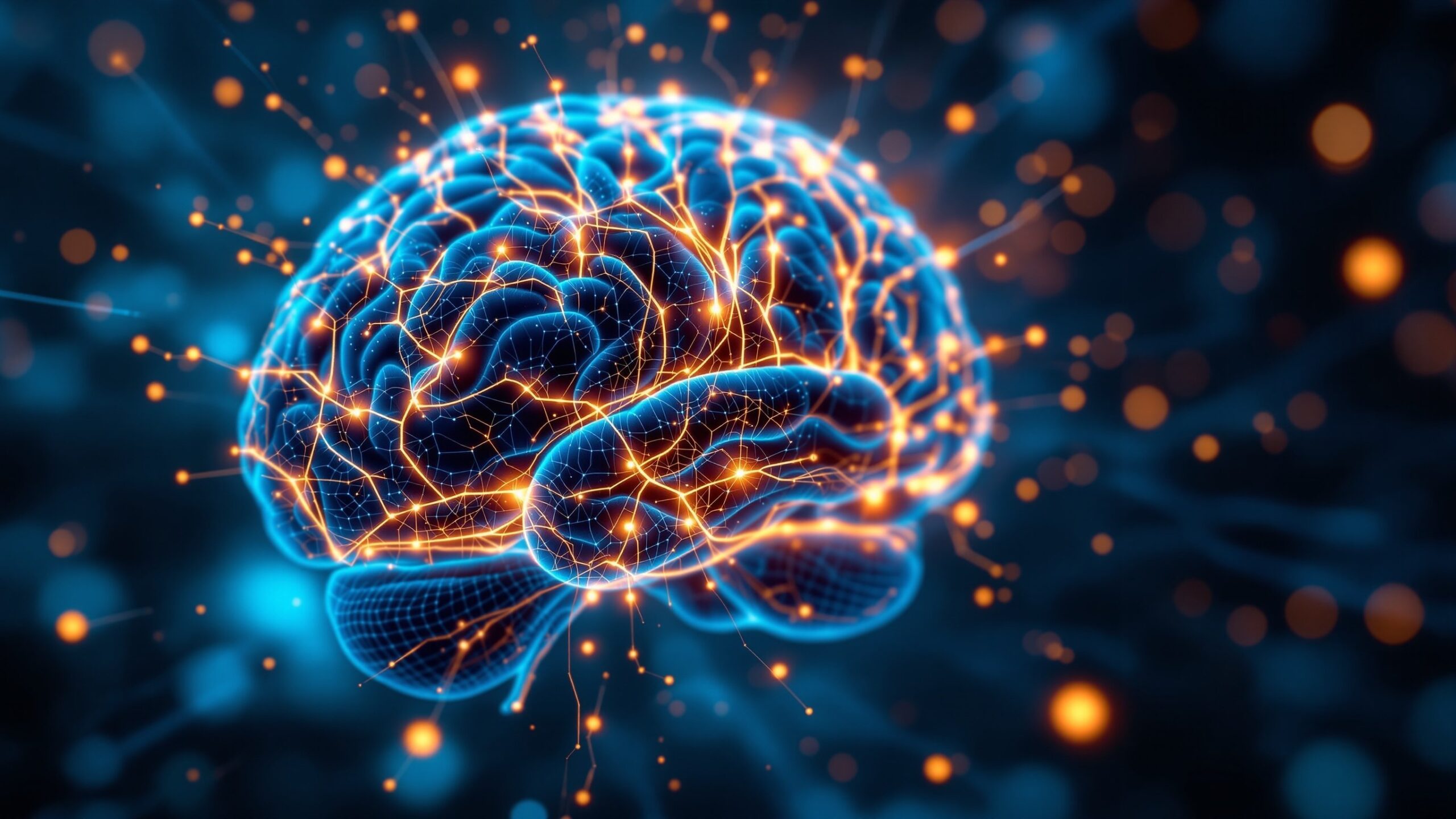
Imagine the brain as the ultimate processor—constantly receiving, sorting, storing, and retrieving information. The Information Processing Theory likens the human mind to a sophisticated computer system, where learning occurs through a sequence of mental operations that transform raw sensory data into meaningful knowledge. This theory provides a powerful framework for understanding how people learn, remember, and apply information. Emerging in the mid-20th century, Information Processing Theory revolutionized cognitive psychology. Scholars such as Atkinson and Shiffrin built models that explained learning as a dynamic system rather than a static act of memorization. The theory brought order to the mystery of how we think—identifying stages, structures, and mechanisms within the learning process. It didn’t just describe how memory works; it showed how to make learning work better. Unlike earlier behaviorist models, which focused on external actions and reinforcement, Information Processing Theory opened the black box of the mind. It viewed learning as an active, internal process—one where attention, encoding, and retrieval play starring roles in constructing knowledge.
A: Massed study creates fragile traces; spaced retrieval reconsolidates and strengthens memory.
A: Only when paired with active processing (notes, questions, recall); alone it promotes passive review.
A: Short, focused sessions with spaced revisits outperform long, single sittings.
A: Grouping items into meaningful units to fit working memory’s limits and boost recall.
A: Create examples, analogies, and test yourself in your own words; avoid verbatim-only practice.
A: When aligned to the text, they add a complementary code and reduce processing effort.
A: Yes—task switching taxes attention and weakens encoding and comprehension.
A: Use retrieval practice, interleaving, and spaced repetition; focus on understanding, not throughput.
A: Retrieval itself is a learning event that strengthens and reorganizes memory.
A: Do a brief spaced recall run: key questions, concept links, and a final teach-back summary.
The Foundations of Information Processing
At its heart, Information Processing Theory draws from both psychology and computer science. Just as a computer uses input, storage, and output, the human brain processes sensory information through input (perception), encoding (transformation), storage (memory), and retrieval (application). The human cognitive system comprises three main components: sensory memory, working memory, and long-term memory. Each plays a distinct role in how information is handled. Sensory memory acts as the first filter. It receives vast amounts of data from our environment—sounds, visuals, textures—but only a fraction of this information moves forward. Within seconds, most sensory impressions fade unless attention is applied.
Working memory, often called short-term memory, is where active processing occurs. This is the mental workspace where learners manipulate and rehearse information. However, it has a limited capacity—typically capable of holding about seven pieces of information at a time. Without rehearsal or connection to prior knowledge, this information disappears quickly. Finally, long-term memory is the repository of all accumulated knowledge, experiences, and skills. Once information is encoded effectively here, it can be retrieved when needed, sometimes even years later. Together, these three systems form the basis of how humans learn, remember, and apply what they know.
The Role of Attention: The Gateway to Learning
Attention is the mind’s spotlight—selecting which stimuli from the sensory flood will be processed. Without attention, learning cannot begin. The human brain is bombarded by millions of sensory cues every second, yet only those that capture focus move into conscious awareness.
Attention is influenced by relevance, interest, and emotional engagement. When learners connect material to personal meaning or curiosity, their attention deepens naturally. Conversely, distractions and cognitive overload can easily interrupt this process.
Teachers and designers who understand attention’s role can craft learning environments that optimize focus. Structured tasks, meaningful goals, and emotionally rich content all serve to capture and sustain attention, ensuring information reaches working memory and beyond.
Encoding: Turning Perception into Knowledge
Once information is attended to, it must be encoded—transformed into a form the brain can store. Encoding is not passive; it’s an act of interpretation. Learners connect new information to prior knowledge, organize it conceptually, and sometimes translate it into mental imagery or verbal codes.
Psychologists identify several types of encoding: visual (imagery-based), acoustic (sound-based), and semantic (meaning-based). Among these, semantic encoding—linking information to meaning—produces the most durable memories. For example, simply repeating a fact about photosynthesis may fade quickly, but connecting it to real-world plant growth makes it memorable.
Encoding also benefits from emotional engagement. Events with strong emotional resonance, like a personal triumph or powerful story, are encoded more deeply because they activate both the amygdala and hippocampus—regions associated with memory consolidation. Effective learning, therefore, is not about exposure—it’s about transformation. Information becomes knowledge when the mind reshapes it into meaningful connections.
Working Memory: The Brain’s Command Center
Working memory is where learning comes alive. It is a mental workbench that holds and manipulates information temporarily while complex cognitive tasks—like reasoning, comprehension, and problem-solving—take place. This workspace is limited, typically holding five to nine items at once. Overloading it with too much information can hinder learning. For example, cramming vast details before understanding underlying principles leads to quick forgetting. That’s why chunking, or grouping related information, helps learners handle more material effectively. A phone number, for instance, is easier to remember as “555-478-9032” rather than “5554789032.”
Working memory interacts closely with long-term memory. Prior knowledge stored in long-term memory can reduce the cognitive load on working memory by offering shortcuts and schemas—mental structures that organize information efficiently. Expert learners rely heavily on these schemas, freeing cognitive space for new challenges. Understanding working memory helps educators design instruction that matches the brain’s capacity—balancing challenge and manageability to maintain optimal engagement.
Storage: The Architecture of Long-Term Memory
Long-term memory is not a single vault but a vast network of interconnected systems. It holds knowledge in two main forms: declarative memory (facts and events) and procedural memory (skills and habits). Declarative memory can be further divided into semantic memory—understanding concepts and meanings—and episodic memory, which stores personal experiences.
Information becomes part of long-term memory through consolidation, a biological process strengthened by repetition, emotion, and sleep. The hippocampus plays a critical role here, helping to stabilize and integrate new knowledge with existing neural networks. Unlike working memory, long-term memory has virtually limitless capacity. However, retrieval is the challenge—if information isn’t revisited or used, its neural pathways weaken.
This is why active recall, practice, and spaced repetition are powerful learning tools: they strengthen memory traces over time. Every time we retrieve a memory, we also reconstruct it. This process can enhance understanding but also lead to distortions, showing that memory is not a fixed archive—it’s a living, adaptive system.
Retrieval: Bringing Knowledge Back to Life
Retrieval is where stored knowledge returns to conscious thought for application. It’s what allows a student to answer an exam question, a musician to recall a melody, or a doctor to diagnose a condition. The ease of retrieval depends on how deeply information was encoded and how frequently it has been accessed. Retrieval cues—environmental or internal prompts that trigger recall—play a critical role. For example, studying in the same context as testing can improve performance because context-related cues are consistent.
Emotional states and sensory details can also serve as powerful recall triggers. The retrieval practice effect—actively recalling information instead of simply rereading—has proven one of the most effective ways to reinforce learning. By forcing the brain to reconstruct knowledge, retrieval strengthens the neural networks associated with memory, making recall faster and more accurate in the future.
Cognitive Load and the Limits of Processing
Even the most powerful processor has limits. The human mind’s cognitive capacity is constrained by the bandwidth of working memory. Cognitive Load Theory, an extension of Information Processing Theory, emphasizes that instructional design must account for these limits.
There are three types of cognitive load: intrinsic (inherent difficulty of the task), extraneous (unnecessary distractions or complexity), and germane (the effort devoted to creating meaningful connections). Effective instruction reduces extraneous load and optimizes germane load, allowing the learner to focus on understanding rather than managing confusion.
For example, complex visuals cluttered with irrelevant details can overwhelm learners, while clean, guided materials support comprehension. Similarly, breaking large topics into sequenced steps aligns with how the brain naturally processes and integrates information. When educators understand cognitive load, they can design experiences that respect the brain’s architecture—making learning both efficient and enjoyable.
The Role of Metacognition in Information Processing
Beyond encoding and retrieval lies another powerful process: metacognition, or “thinking about thinking.” Metacognition enables learners to monitor their understanding, adjust strategies, and reflect on what works best for them. Students who apply metacognitive skills—such as self-questioning, goal setting, and error correction—tend to retain information more effectively. They become aware of their cognitive processes and use that awareness to guide attention and memory resources strategically. Teaching metacognitive awareness encourages learners to take control of their information processing. It transforms them from passive receivers of information into active architects of understanding.
Emotion, Motivation, and the Human Element
While Information Processing Theory often uses computer metaphors, it’s important to remember that humans are not machines. Emotion, motivation, and social context play enormous roles in how information is processed.
Emotional engagement enhances encoding because it activates the brain’s reward and attention systems. Motivation, particularly intrinsic motivation, determines whether learners invest the effort needed to move knowledge from short-term to long-term storage. A curious, self-directed learner will process information more deeply than one who studies purely for external rewards.
Social learning also interacts with information processing. Discussion, collaboration, and explanation stimulate retrieval and reinforce understanding by allowing learners to articulate and refine their knowledge through dialogue. Thus, while Information Processing Theory provides structure, the emotional and social dimensions breathe life into the system, turning information into meaning.
Applications in Education and Training
The insights from Information Processing Theory have reshaped modern education. Teachers and trainers now design learning experiences that align with how the mind naturally functions. They capture attention through relevant hooks, structure lessons to manage cognitive load, and use scaffolding to move information smoothly from short-term to long-term memory. Frequent review, retrieval practice, and spaced repetition help solidify learning. Feedback closes the loop—allowing learners to reflect and refine their understanding.
Technology-enhanced learning also benefits from this framework. Adaptive learning platforms use algorithms to manage pacing, reinforce weak areas, and provide timely feedback—mirroring how human memory systems optimize performance. Whether in classrooms, workplaces, or online environments, Information Processing Theory empowers educators to teach smarter—not just harder—by aligning instruction with cognitive design.
Challenges and Critiques
Despite its strength, Information Processing Theory is not without critics. Some argue that its computer analogy oversimplifies human thought, ignoring emotion, creativity, and cultural factors. Others note that learning cannot always be reduced to sequential stages—real cognition is messy, fluid, and context-dependent. However, most researchers agree that Information Processing Theory provides a valuable foundation. It offers a lens through which educators can understand and improve learning, even as newer models like embodied cognition and social constructivism expand upon it. The theory’s continued relevance lies in its adaptability—it evolves as we deepen our understanding of the brain.
The Future of Learning and Memory Science
Advances in neuroscience are revealing ever more about the brain’s learning systems. Brain imaging technologies now show how encoding and retrieval activate specific neural pathways, while AI-based analytics model learning behaviors at scale. The synergy between Information Processing Theory and neuroscience offers exciting potential for personalized education.
As technology grows more immersive—through virtual and augmented reality—it can replicate the sensory richness and engagement that optimize information processing. Meanwhile, insights into sleep, nutrition, and emotional regulation are expanding how we understand memory consolidation and performance. The future of learning will likely merge cognitive science with technology, crafting environments where every learner’s unique processing style is recognized and supported.
The Lasting Power of How We Learn
Information Processing Theory remains one of the cornerstones of modern learning science because it illuminates the invisible architecture of thought. It reminds us that learning isn’t magic—it’s a systematic yet profoundly human process.
When educators and learners grasp how information is encoded, stored, and retrieved, they unlock the keys to mastery. Knowledge becomes more than memory—it becomes part of identity and capability.
Ultimately, the theory teaches us that learning is not just about collecting facts, but about transforming information into insight—a process that continues for a lifetime.