
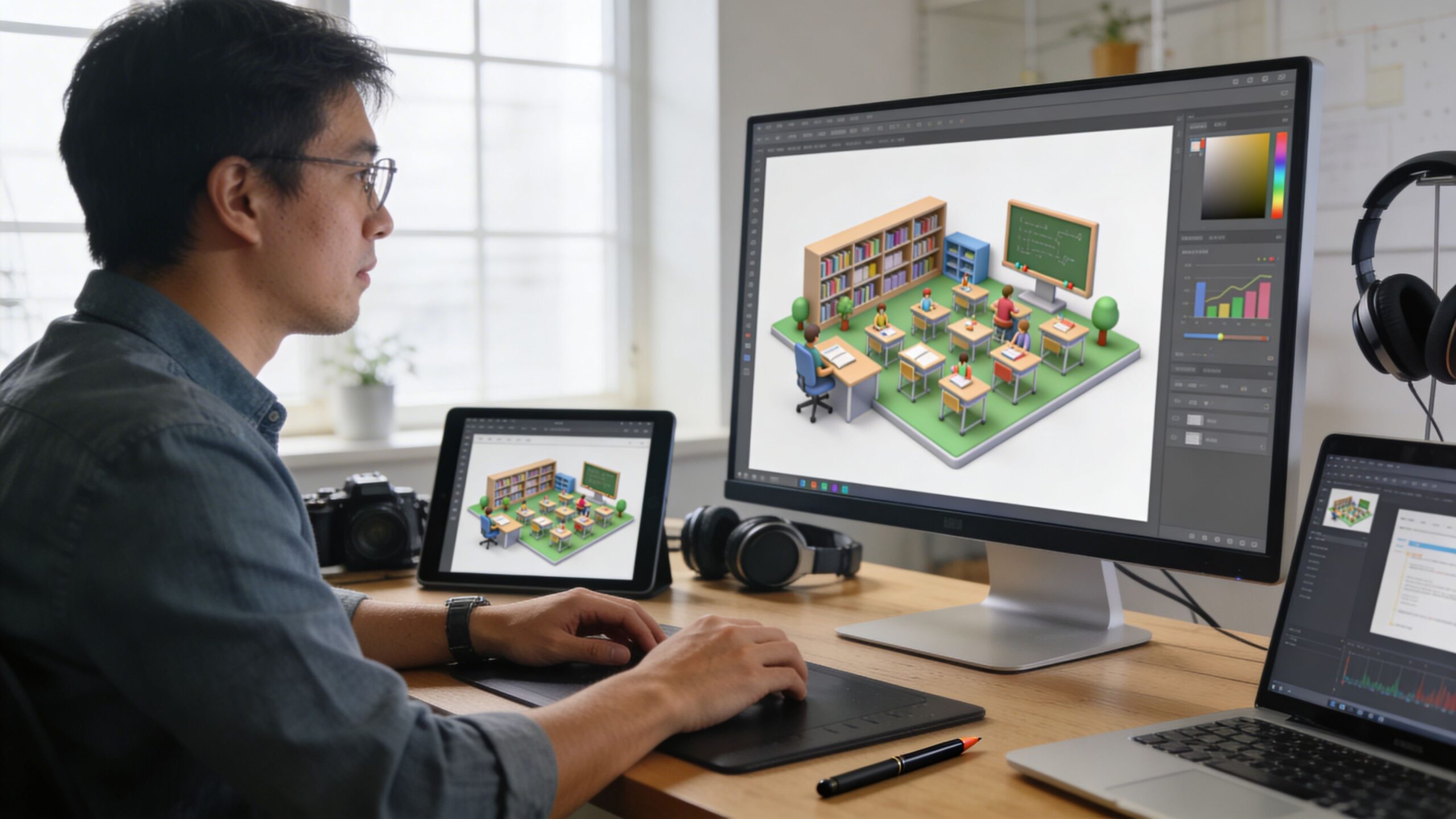
Learning becomes far more exciting when ideas can be explored from every angle. 3D learning models bring lessons to life by turning flat explanations into immersive visual experiences that learners can rotate, examine, and understand in greater detail. Whether used to explore anatomy, engineering systems, scientific structures, product designs, historical artifacts, or technical processes, 3D models help learners see relationships, movement, and depth in ways that traditional media often cannot match. They transform abstract concepts into interactive experiences that feel more tangible, memorable, and engaging. On eLearning Street, this section explores the growing power of 3D learning models in digital education. These tools make it possible to present complex ideas with greater clarity while encouraging hands-on discovery and active participation. Instead of simply reading or watching, learners can interact with digital objects and gain a deeper understanding through exploration. From course designers and trainers to students and professionals, 3D learning models open new possibilities for modern education. They add dimension, realism, and curiosity to the learning experience, helping turn information into something learners can truly visualize, investigate, and remember.
A: They are interactive digital objects used to help learners explore and understand subjects in greater depth.
A: They make structure, movement, and spatial relationships easier to see and understand.
A: Science, anatomy, engineering, manufacturing, history, and technical training are common examples.
A: Yes, many models can be rotated, zoomed, and explored from different angles.
A: Usually they work best as part of a broader lesson that includes guidance and explanation.
A: No, they can be useful for beginner, intermediate, and advanced learners alike.
A: Many do, as long as the content is designed and optimized for mobile performance.
A: Yes, layered and exploded views are one of their most valuable educational features.
A: Yes, many VR and AR experiences are built from the same types of 3D assets.
A: Clear objectives, smooth interaction, strong visuals, and guidance that supports exploration.