What Is Virtual Reality in Education?
Virtual reality in education is the use of immersive digital environments to help students learn through experience instead of only reading, listening, or watching. With a VR headset, learners can enter simulated classrooms, science labs, historical cities, medical environments, outer space, or technical training spaces that feel interactive and three-dimensional. Instead of viewing a lesson from the outside, students become part of the lesson itself. In 2026, VR is no longer just a futuristic experiment. It is becoming a practical learning tool for schools, universities, online education platforms, workforce training programs, and home learning environments. The biggest promise of virtual reality is simple: it turns abstract information into something learners can see, explore, and remember.
A: It is the use of immersive digital environments to teach, train, and explore subjects interactively.
A: Most full VR lessons require a headset, though some platforms offer desktop previews.
A: No. VR works best as a powerful supplement to teachers, lessons, and discussion.
A: Yes, when sessions are supervised, age-appropriate, and kept at comfortable lengths.
A: Science, history, medicine, engineering, geography, language, and career training are strong fits.
A: Yes. Virtual classrooms can make remote learning more interactive and social.
A: Costs vary, but schools can begin with small headset sets and focused pilot programs.
A: Some can, so lessons should include breaks, comfort settings, and non-VR alternatives.
A: It can improve engagement and understanding when used with clear educational goals.
A: Expect lighter headsets, smarter simulations, AI guidance, and more immersive digital classrooms.
Why VR Matters for the Future of Learning
Education has always depended on imagination. A student reading about ancient Rome must imagine the streets, buildings, crowds, and daily life. A biology student studying cells must imagine microscopic systems moving inside the body. A future engineer must imagine forces, structures, and machine parts working together. Virtual reality reduces that distance between imagination and understanding.
VR matters because it makes learning more active. Students can walk through a virtual museum, practice a dangerous procedure safely, explore the ocean floor, or stand inside a giant model of the human heart. These experiences can make lessons feel less like memorization and more like discovery. For modern learners surrounded by digital media, that level of interaction can be the difference between temporary attention and lasting understanding.
How Virtual Reality Works in the Classroom
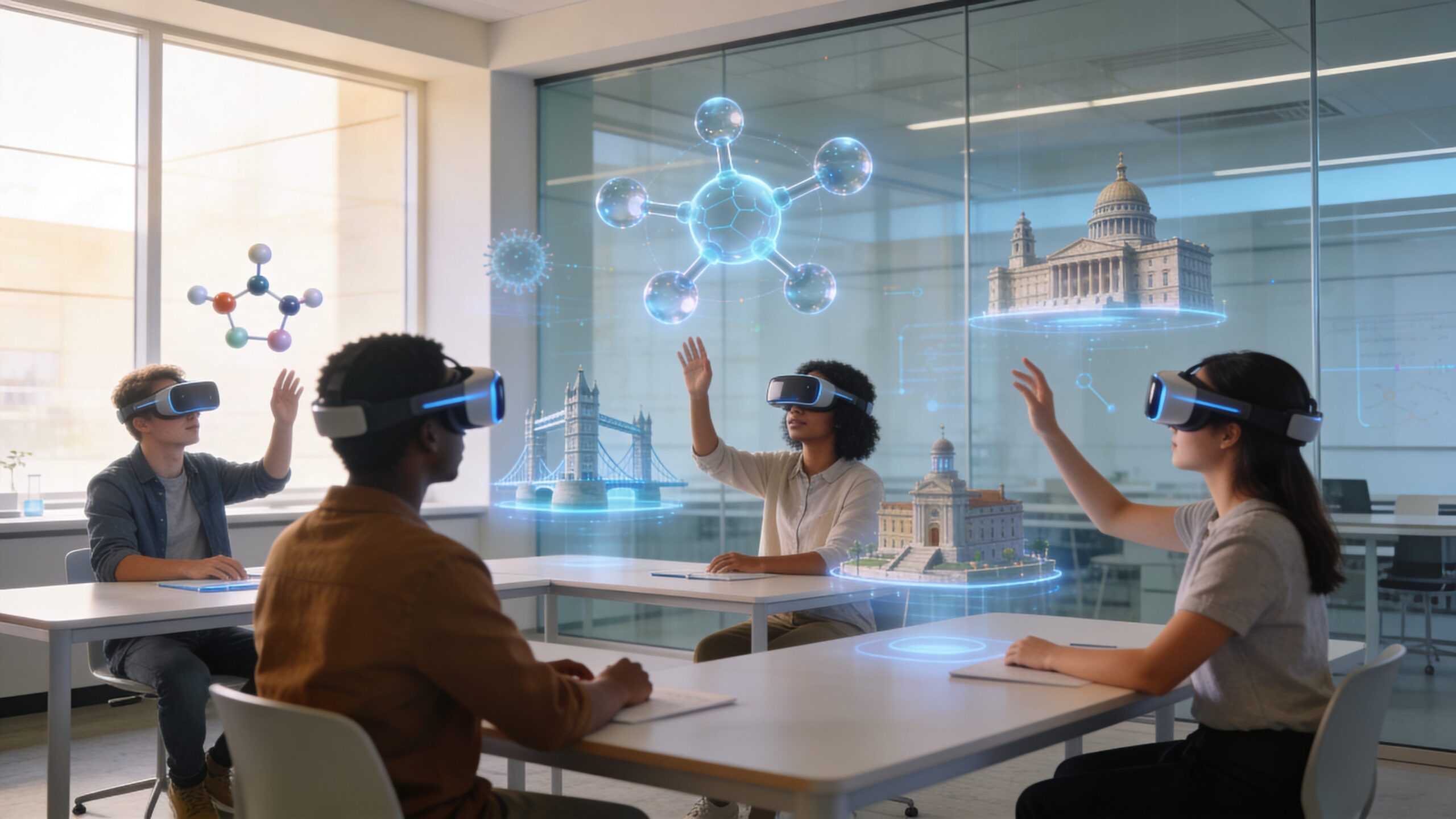
A VR learning setup usually includes a headset, software, and a learning activity designed for a specific goal. Some systems use handheld controllers, while others track hand movement, body position, or eye focus. The student enters a digital scene and interacts with objects, environments, or guided lessons. In a classroom, VR can be used as a group activity, a station-based lesson, or an individual learning experience. A teacher might introduce a topic, let students explore a virtual simulation, then lead a discussion afterward. The strongest VR lessons are not just flashy experiences. They are structured around clear outcomes, reflection, and connection to real academic goals.
The Biggest Benefits of VR in Education
The most obvious benefit of VR is engagement. Students are naturally curious when they can step inside a lesson. A virtual volcano, ancient civilization, or space station can make learning feel exciting from the first moment. That excitement matters because attention is the gateway to understanding.
Another major benefit is safe practice. Learners can make mistakes in a simulation without real-world danger or expense. Medical students can practice procedures, pilots can train in simulated conditions, and trade students can troubleshoot equipment before touching physical systems. VR also helps visual and hands-on learners who may struggle with text-heavy instruction.
VR and Student Retention
Students often remember what they experience more deeply than what they only read. VR supports this by combining movement, visuals, sound, interaction, and emotional engagement. A student who virtually walks through a rainforest ecosystem may remember the relationships between plants, animals, climate, and geography more clearly than a student who only studies a diagram. This does not mean VR replaces books, teachers, or traditional study. Instead, it strengthens them. The best learning often happens when immersive experiences are paired with reading, discussion, writing, projects, and assessment. VR gives students a memorable foundation, while traditional instruction helps organize and deepen that knowledge.
Virtual Field Trips
Virtual field trips are one of the easiest ways to understand VR in education. Instead of traveling physically, students can visit places that would be too expensive, distant, dangerous, or impossible to reach. They can explore ancient ruins, coral reefs, national parks, museums, space environments, or historical settings from the classroom.
This is especially powerful for schools with limited field trip budgets. VR can give more students access to meaningful experiences without transportation barriers. It also allows teachers to connect locations directly to lesson plans, making travel educational rather than just observational.
VR for Science and STEM Learning
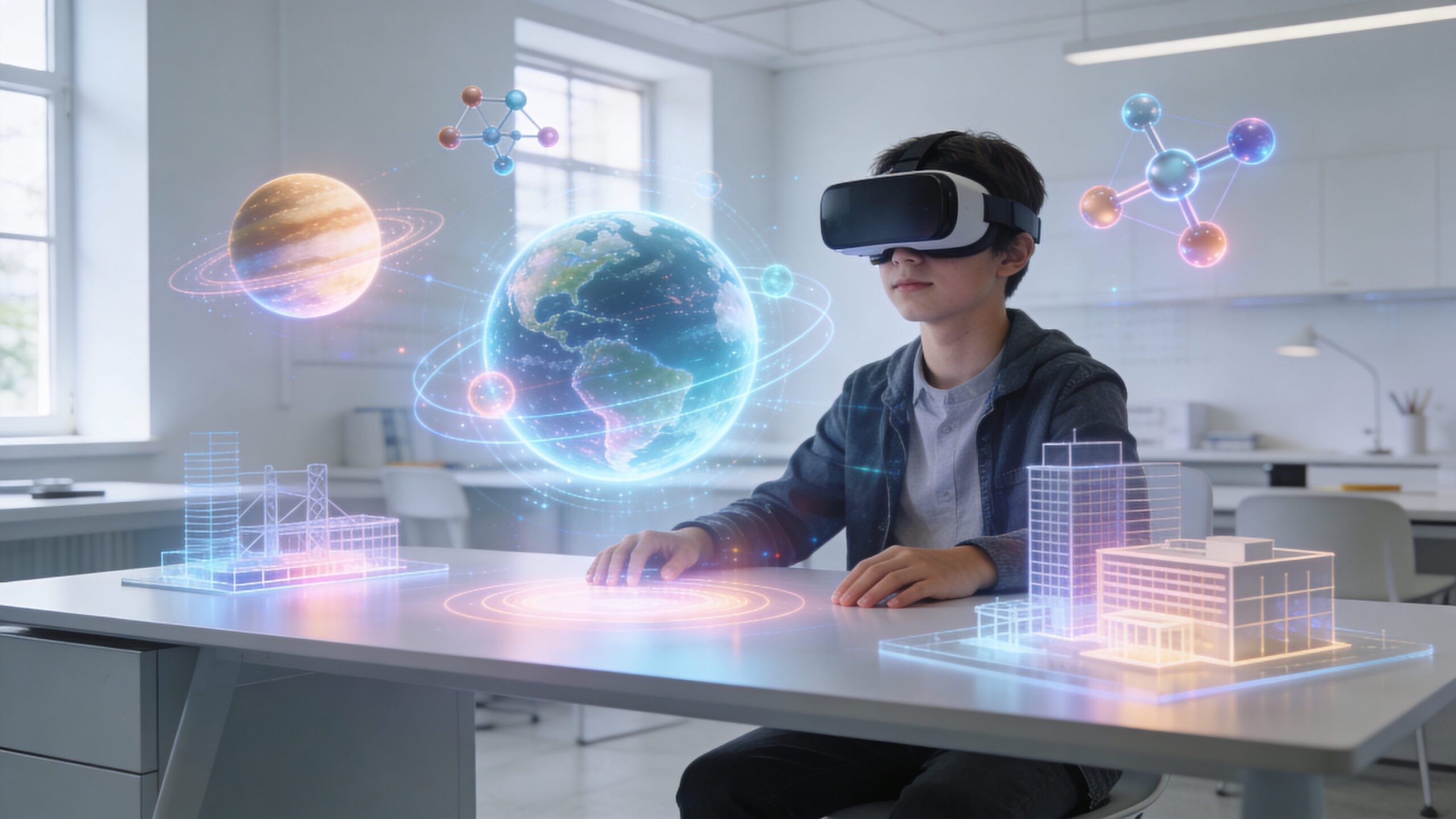
Science is one of the strongest areas for virtual reality because many scientific concepts are difficult to see directly. Students can explore atoms, molecules, ecosystems, planets, body systems, and engineering designs in three dimensions. Instead of looking at flat diagrams, they can move around models and observe how parts connect. In STEM education, VR helps students test ideas through simulation. They can build structures, run experiments, observe reactions, and analyze cause and effect. This makes science feel more like investigation than memorization. For students who might feel intimidated by technical subjects, VR can make complex ideas more approachable and exciting.
VR for History and Social Studies
History becomes more powerful when students can experience setting and context. VR can place learners inside reconstructed cities, cultural landmarks, historical events, or archaeological sites. This helps students understand that history was lived by real people in real places, not just recorded in timelines.
For social studies, VR can also build empathy and global awareness. Students can explore different regions, communities, and environments in ways that encourage curiosity about the world. When used responsibly, immersive learning can help students connect facts to human experience.
VR for Career and Technical Education
Career and technical education may be one of the most practical uses of VR. Students training for healthcare, aviation, construction, manufacturing, emergency response, automotive repair, or engineering can practice skills in realistic environments. This helps them build confidence before working with real tools, patients, machines, or job sites. VR also allows schools to offer simulations that might be too expensive to recreate physically. A welding simulator, medical training scenario, or industrial safety exercise can be repeated many times without consuming materials or creating risk. For workforce readiness, this makes VR a valuable bridge between classroom learning and real-world performance.
VR for Online Learning
Online learning has grown rapidly, but it can sometimes feel isolated. VR has the potential to make digital education more social, present, and interactive. Instead of watching a lecture alone, students can meet inside a virtual classroom, collaborate on projects, and interact with 3D learning materials.
This can make remote education feel more personal. A virtual classroom can include discussion spaces, labs, simulations, and group environments. For eLearning platforms, VR offers a way to move beyond video lessons and quizzes into truly immersive learning experiences.
The Role of Teachers in VR Learning
Teachers remain essential in VR education. Technology can create the environment, but teachers create meaning. They choose the learning goal, guide the experience, ask questions, manage reflection, and help students connect the simulation to larger concepts. The best VR classrooms are not technology-centered; they are learning-centered. A headset alone does not create education. The teacher’s role is to turn immersion into understanding. In 2026, educators who use VR effectively will focus on planning, pacing, accessibility, and discussion just as much as the digital experience itself.
Common Challenges of VR in Education
VR is exciting, but it is not perfect. Cost can still be a challenge, especially for schools that need multiple headsets, software subscriptions, storage, cleaning systems, and technical support. Teachers also need training so VR does not become a novelty that fades after a few uses.
There are also comfort and accessibility concerns. Some students may experience motion discomfort, eye strain, or sensory overload. Others may need adapted experiences. Good VR implementation requires thoughtful session lengths, inclusive design, clear safety rules, and alternatives for students who cannot or should not use headsets.
How Schools Can Start with VR
Schools do not need to transform every classroom overnight. A smart beginning is to start small with a pilot program. One department, grade level, or subject area can test VR lessons, gather feedback, and measure results. This helps schools learn what works before investing heavily. The best starting point is a clear educational problem. A school might ask: Which lessons are hard to visualize? Which skills are risky to practice? Which experiences are unavailable to our students? When VR solves a real learning challenge, it becomes more than a gadget. It becomes a meaningful instructional tool.
What Students Should Know Before Using VR
Students should understand that VR is a learning environment, not just entertainment. They need to follow safety guidelines, respect shared equipment, and stay aware of their physical surroundings. Short, focused sessions are usually better than long, unfocused ones.
Students should also be encouraged to reflect after each VR experience. What did they notice? What surprised them? What did they learn that would have been harder to understand from a textbook? Reflection turns immersion into knowledge.
The Future of Virtual Reality in Education
The future of VR in education will likely become more personalized, more affordable, and more connected to artificial intelligence. Students may enter adaptive learning environments that respond to their progress in real time. A virtual tutor might guide them through a difficult concept, while analytics help teachers understand where support is needed. As hardware improves, VR may become lighter, more comfortable, and easier to use. Schools may combine VR with augmented reality, mixed reality, digital twins, and immersive simulations. The future classroom will not be limited to desks and screens. It will become a gateway to experiences that once seemed impossible.
Why VR Is More Than a Trend
Virtual reality is not valuable simply because it is new. It is valuable because it matches how people naturally learn: by exploring, practicing, observing, failing, adjusting, and trying again. When used with purpose, VR can make education more active, memorable, and meaningful.
For beginners, the most important thing to remember is that VR is a tool, not a replacement for great teaching. Its power comes from how it is used. In 2026 and beyond, virtual reality will continue shaping the future of learning by making education feel less distant and more alive.
How To Put The Idea Into Practice
The practical value of virtual reality in education appears when it changes what a learner does next. For a course designer considering whether VR adds meaningful practice or only novelty, the goal is not to admire the concept from a distance. The goal is to turn it into a small, observable learning move that can be practiced, checked, and improved. That may mean changing the study routine, redesigning a lesson activity, choosing a better tool, or giving feedback that helps the learner try again with more clarity.
A useful starting point is using VR for spatial understanding, simulation, rehearsal, or safe practice when ordinary media cannot do the job. This keeps the topic connected to action instead of leaving it as a broad education idea. The activity does not need to be complicated. It needs to make the learner think, recall, compare, explain, decide, revise, or apply something in a way that can be seen. When the task creates visible evidence of understanding, teachers and learners can respond before confusion becomes permanent.
This matters across science labs, career training, medical rehearsal, history lessons, design courses, and immersive field trips. Each setting has different constraints, but the same design question remains: what does the learner need to do with the idea after the explanation ends? If the answer is unclear, the lesson usually needs a stronger example, a shorter practice step, or feedback that points to the next improvement.
What To Watch During Review
The main risk is using immersive technology without clear learning goals, accessibility planning, or debriefing. That risk shows up when a lesson sounds convincing but does not improve recall, judgment, confidence, or performance. A strong review looks at learner behavior rather than surface polish. Did learners remember the point later? Did they make better choices? Did they ask clearer questions? Did they correct the same mistake less often? Those signs matter more than whether the topic felt familiar during the first pass.
Review also protects the article or course from becoming too thin. If the content only defines the term, learners may leave with vocabulary but no usable method. Better learning content explains the idea, shows why it matters, gives a realistic example, names a common mistake, and offers a way to test understanding. That fuller path helps the reader connect the topic to real study, teaching, training, or decision-making.
The final check is transfer. A learner has gained something meaningful when the idea can travel beyond the screen. They can use it in a new class, a work task, a study session, a planning meeting, or a conversation with another learner. When virtual reality in education supports that kind of transfer, it becomes more than an education term. It becomes part of how learning improves.
That is the standard worth using during revision: clear enough to understand, specific enough to practice, and useful enough to carry into the next learning moment.