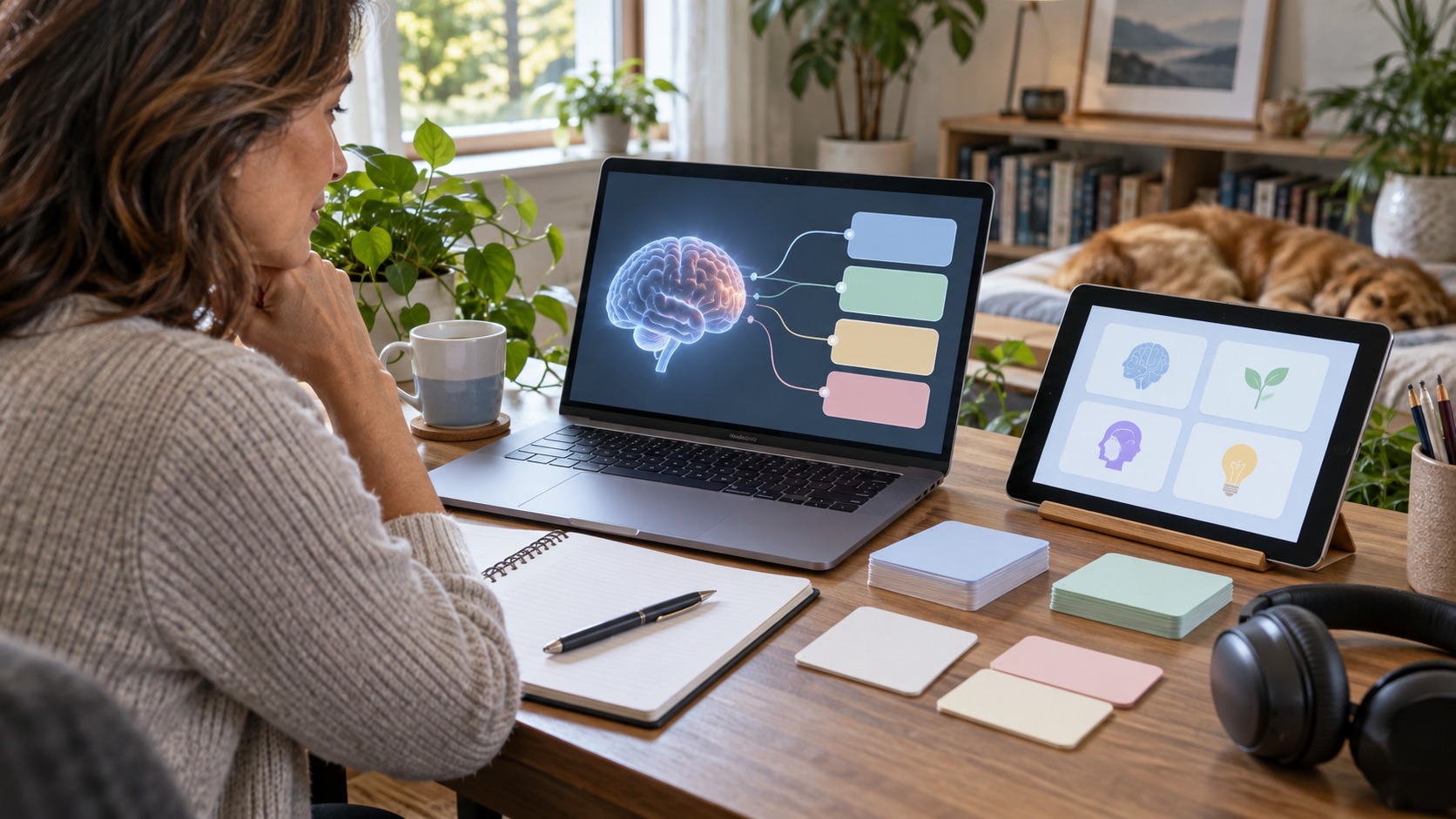
The Psychology of Motivation: Why We Start (and Stop)
People start learning when a goal feels valuable and possible. They stop when the effort feels too large, progress is hard to see, support disappears, or the task no longer feels connected to a meaningful outcome.
A: It should point the learner toward a concrete stop action, such as choosing a practice step, reviewing feedback, or checking whether the course activity matches the goal of the psychology of motivation: why we start (and stop).
A: It should point the learner toward a concrete psychology action, such as choosing a practice step, reviewing feedback, or checking whether the course activity matches the goal of the psychology of motivation: why we start (and stop).
A: It should point the learner toward a concrete motivation action, such as choosing a practice step, reviewing feedback, or checking whether the course activity matches the goal of the psychology of motivation: why we start (and stop).
A: It should point the learner toward a concrete start action, such as choosing a practice step, reviewing feedback, or checking whether the course activity matches the goal of the psychology of motivation: why we start (and stop).
A: It should point the learner toward a concrete stop action, such as choosing a practice step, reviewing feedback, or checking whether the course activity matches the goal of the psychology of motivation: why we start (and stop).
A: It should point the learner toward a concrete psychology action, such as choosing a practice step, reviewing feedback, or checking whether the course activity matches the goal of the psychology of motivation: why we start (and stop).
A: It should point the learner toward a concrete motivation action, such as choosing a practice step, reviewing feedback, or checking whether the course activity matches the goal of the psychology of motivation: why we start (and stop).
A: It should point the learner toward a concrete start action, such as choosing a practice step, reviewing feedback, or checking whether the course activity matches the goal of the psychology of motivation: why we start (and stop).
A: It should point the learner toward a concrete stop action, such as choosing a practice step, reviewing feedback, or checking whether the course activity matches the goal of the psychology of motivation: why we start (and stop).
A: It should point the learner toward a concrete psychology action, such as choosing a practice step, reviewing feedback, or checking whether the course activity matches the goal of the psychology of motivation: why we start (and stop).
What This Topic Really Means
The Psychology of Motivation: Why We Start (and Stop) is best understood through motivation psychology, starting behavior, stopping behavior, habits, confidence, task friction, feedback, learner identity, goal design, and persistence. The topic matters because learning is not just content delivery. It is the process of helping people pay attention, connect new ideas to what they already know, practice at the right level, and use knowledge when the lesson is over.
The audience includes students, adult learners, teachers, coaches, parents, managers, trainers, course designers, and anyone trying to restart a stalled learning goal. That range matters because a school, a workplace, and an individual learner may use the same tool in very different ways. A teacher may need classroom visibility, an instructional designer may need structure, a manager may need transfer to job performance, and a learner may need clarity without feeling overwhelmed.
Strong eLearning content connects technology, learning science, and practical use. A tool can look impressive in a demo while failing to improve practice. A method can sound simple while requiring careful sequencing, feedback, accessibility, and measurement to work well.
Current Learning Context
Motivation is affected by both inner beliefs and external conditions. Confidence, autonomy, relevance, social support, and feedback can make effort feel worthwhile. Friction, confusion, isolation, and repeated failure can make even important goals feel avoidable. This is why motivation often improves after the learning task becomes smaller and more specific.
The current learning environment rewards tools and methods that respect attention. Learners move between screens, jobs, classes, family demands, and constant information. Long content alone rarely solves the problem. People need clear goals, useful examples, guided practice, and repeated chances to retrieve and apply what they learned.
That is why the best digital learning experiences are not built around novelty alone. They use technology to make instruction more targeted, feedback more useful, and practice easier to sustain. When the design is thoughtful, digital tools can widen access, support different paces, and help educators see where learners are stuck.
The Learning Signals That Matter
The key checks are starting cue, task size, emotional friction, confidence, relevance, support, feedback, energy level, environment, reward timing, progress record, and whether the learner can recover after missing a session. These checks keep the topic grounded in real learning rather than surface activity. Clicking through screens, watching videos, or receiving automated recommendations does not automatically mean the learner understands the material.
Good learning signals show up in behavior. Can the learner explain the idea in plain language? Can they choose the right step in a realistic scenario? Can they correct an error? Can they use the concept later without being prompted? Those questions matter more than a clean dashboard or a high completion percentage.
Designers and educators also need to check cognitive load. If a lesson asks learners to read dense text, decode confusing visuals, manage a new platform, and complete a task at the same time, attention gets spent on the interface instead of the learning goal.
Why The Trend Is Easy To Misread
The common mistake is explaining quitting as laziness before checking whether the learning path is vague, overloaded, unsupported, or poorly matched to the learner’s current level. Learning trends often sound stronger than they are because they borrow the language of transformation. A platform may promise personalization, engagement, retention, or creativity, but those outcomes depend on content quality, practice design, feedback, and the context around the learner.
It is also easy to confuse activity with progress. A learner can spend time in a course without building skill. An employee can complete compliance training without knowing what to do under pressure. A student can use an AI tool to produce an answer without understanding the underlying reasoning.
The better approach is to ask what changed in the learner’s mind or behavior. If the method helps people remember, explain, decide, perform, or create with more accuracy, it has educational value. If it only makes the experience look modern, the value is thinner.
A Practical Example
A learner trying to study coding may stop after several confusing tutorials. The restart becomes easier when the goal changes to one small project, one practice block per day, one error log, and one place to ask questions.
This example shows why learning design needs both structure and judgment. The tool or method does not carry the whole experience by itself. It works because the goal is clear, the task resembles real use, the feedback arrives at the right time, and the learner has a way to try again.
Examples also help learners form patterns. When people see how a concept appears in a real classroom, workplace, software tool, or decision, they can connect the abstract idea to action. That connection is what makes the learning feel useful instead of merely informational.
What Learners Need From The Experience
A good motivation reset makes the first step obvious and small enough to take even on a low-energy day.
Learners need orientation before complexity. They need to know what they are learning, why it matters, what good performance looks like, and how to recover when they make a mistake. Without that structure, even a polished course can feel like a maze.
They also need agency. A good learning environment gives people ways to pause, review, ask questions, get feedback, and understand their own progress. Automation can support that process, but it works best when learners can still see the path and make meaningful choices.
Motivation also improves when the lesson feels connected to a real purpose. Learners are more willing to persist when examples resemble the problems they face, when practice feels achievable, and when feedback explains improvement rather than merely marking an answer right or wrong.
What Educators And Teams Need To Notice
Educators, trainers, and platform teams need to look beyond the initial launch. A course or tool may perform well in the first week because it is new, but the real test is whether learners continue to use the skill, remember the idea, or improve performance later.
Measurement needs to match the goal. If the goal is awareness, a short check may be enough. If the goal is skill, learners need practice and feedback. If the goal is workplace performance, managers may need observation, coaching, and job aids. If the goal is academic understanding, assessment needs to reveal reasoning, not only answer production.
Teams also need to plan for support. Learners may need accessibility options, language support, device flexibility, privacy clarity, and human help. Instructors may need training, templates, review time, and permission to adapt materials.
Content maintenance matters as well. Digital courses can become stale when screenshots change, tools add features, workplace procedures shift, or learner questions reveal gaps. A useful learning system needs review dates, ownership, and a way to improve materials after launch.
Technology Choices That Actually Help
Helpful learning technology reduces friction at the right moment. It can organize content, provide practice, support feedback, translate materials, improve accessibility, surface patterns, and give learners another route into the material. The value comes from how well the feature fits the learning task.
A simple tool can outperform a complex platform if it helps learners practice the right thing. A checklist, annotated example, searchable job aid, short scenario, or spaced review plan may produce more learning than a large system with unclear purpose. The best technology choice is the one that makes the next learning action easier.
For AI-enabled tools, human review remains essential. Educators and training teams need to check accuracy, protect data, avoid unfair assumptions, and make sure the tool supports learning rather than bypassing it. Transparency matters because learners and instructors need to understand when a recommendation is useful and when it needs correction.
Integration is another practical test. A learning tool that does not connect with the LMS, calendar, classroom workflow, HR system, or assessment process may create extra work even if the feature looks strong. Good technology fits into the rhythm people already use.
Design Details That Improve Retention
Retention improves when learners revisit important ideas over time. Spaced practice, retrieval questions, mixed examples, reflection prompts, and short follow-up activities help learning survive beyond the first exposure. A single explanation can introduce a concept, but repeated use is what makes it dependable.
Feedback also needs to be specific. Telling a learner that an answer is incorrect is less useful than showing the misconception, naming the missing step, and offering a better strategy for the next attempt. The best digital learning experiences turn mistakes into information.
Good sequencing keeps learners from drowning in details. Start with the basic pattern, add complexity gradually, then ask learners to apply the idea in a realistic situation. That progression helps beginners build confidence while still giving advanced learners a meaningful challenge.
How To Judge Whether It Worked
The strongest evaluation looks at more than completion. Course teams can review quiz performance, scenario choices, confidence ratings, help requests, manager observations, assignment quality, discussion patterns, and whether learners use the skill later. Different goals need different evidence.
It is also useful to compare what learners say with what they can do. A course may feel enjoyable while leaving weak understanding, or it may feel challenging while producing better performance. Both experience and evidence matter, but neither tells the whole story alone.
When results are mixed, revise the learning experience in small ways. Clarify one explanation, replace one weak example, add one practice activity, improve one visual, or adjust one feedback message. Iteration keeps the course alive and prevents old problems from becoming permanent.
Risks To Keep In View
Risks include unrealistic timelines, comparison with faster learners, too many tools, no feedback loop, perfectionism, and giving up after the first broken routine.
Another risk is shallow engagement. A lesson can include badges, videos, quizzes, animations, and AI prompts while still failing to create durable learning. Engagement is valuable when it leads to attention, effort, reflection, and practice. It is less valuable when it only keeps people clicking.
Equity also deserves attention. Learners may differ in device access, language background, reading level, disability, prior knowledge, confidence, and available time. Digital learning improves access only when those differences are part of the design.
Privacy and trust deserve a clear place in any modern learning plan. Learners may share writing, performance data, questions, voice, images, or workplace examples inside digital systems. Teams need to collect only what they can protect and explain why the data is needed.
Practical Next Steps
Start with the learning goal. Name what the learner needs to understand or do, then choose the method that supports that goal. If the goal is recall, use retrieval and spacing. If the goal is decision-making, use scenarios. If the goal is creative production, use examples, critique, revision, and reflection.
Next, check the learner experience from beginning to end. The introduction needs to orient people quickly. The examples need to be relevant. The practice needs to be realistic. The feedback needs to explain the next move. The final activity needs to show whether learning can transfer outside the lesson.
Finally, review the experience after real learners use it. Look for confusion points, dropout patterns, repeated mistakes, accessibility barriers, and places where people complete the activity without gaining confidence. That review cycle turns eLearning from a static content library into a living learning system.
Starting is easier when the goal is meaningful; continuing is easier when the system makes progress visible.