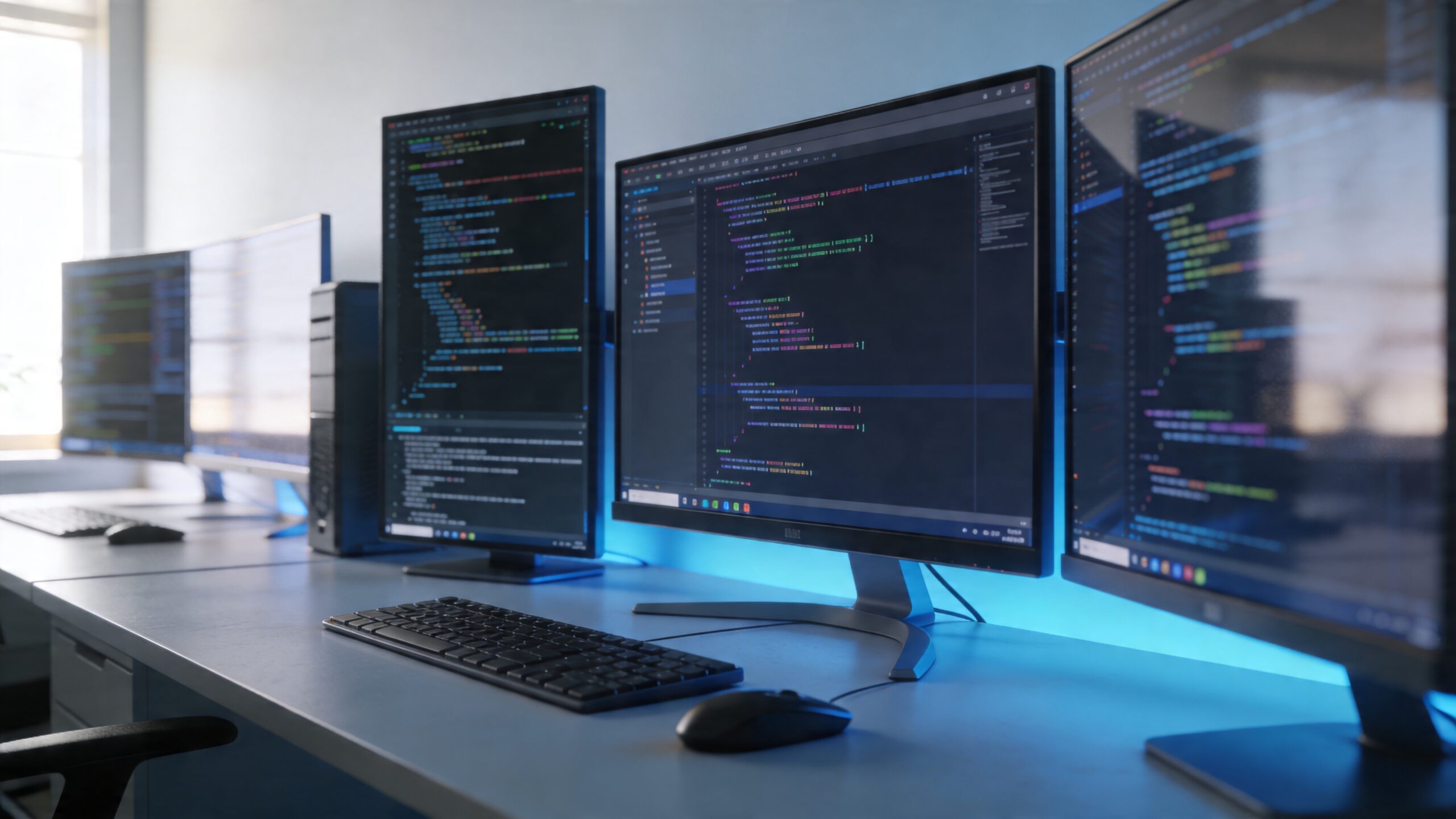
Why Learning to Code Matters More Than Ever
Learning to code has become one of the most practical and empowering skills a person can build. It is no longer limited to software engineers working behind the scenes at tech companies. Coding now touches business, education, design, healthcare, entertainment, finance, and nearly every other part of modern life. From websites and mobile apps to automation tools and artificial intelligence systems, code helps shape the digital experiences people use every day. For beginners, coding can look intimidating from the outside. Strange symbols, unfamiliar terms, and endless opinions about the “best” way to start often create confusion before real learning even begins. The good news is that coding is not reserved for geniuses or people with advanced math backgrounds. It is a learnable skill built step by step through practice, patience, and repetition. Once you understand the path, the process becomes far more approachable.
A: Python and JavaScript are two of the strongest starting options because they are practical and widely used.
A: No. Basic logic matters more at the start than advanced math.
A: You can learn the basics in a few months, but growth continues as you build projects and solve harder problems.
A: It can feel challenging at first, but it becomes much easier when learned step by step.
A: Start with short lessons, then apply what you learn in small projects as soon as possible.
A: Mistakes are part of the learning process and often teach the most.
A: Yes. Many successful developers are self-taught through practice, courses, and project work.
A: A computer, a code editor, internet access, and a clear learning path are enough.
A: Start learning them once you begin building and saving projects regularly.
A: Focus on small wins, finish simple projects, and track your progress over time.
What Coding Actually Is
At its core, coding is the act of writing instructions that tell a computer what to do. These instructions are written in programming languages, which are structured ways for humans and machines to communicate. A computer does not think creatively or fill in missing gaps. It follows clear commands. That means coding is really about problem-solving, logic, and precision.
When beginners first start, it helps to think of code like building with blocks. Small pieces come together to create larger systems. A variable stores information. A function performs a task. A condition checks whether something is true or false. A loop repeats an action. These pieces may seem simple alone, but when combined thoughtfully, they can produce websites, games, apps, and powerful tools. Learning code means learning how these pieces work together in a structured way.
Step One: Choose the Right First Language
One of the biggest mistakes beginners make is spending too much time worrying about which language to learn first. The truth is that your first language matters, but not as much as your commitment to learning the basics well. A good beginner language should be readable, widely used, and practical enough to help you build real things early on. Python is often the most beginner-friendly starting point because its syntax is clean and easy to read. It is popular in automation, data science, artificial intelligence, and general programming education. JavaScript is another strong option, especially if your interest is websites and interactive online experiences. If you want to build things that people can open in a browser, JavaScript gives you fast, visible results. Both are excellent starting points, and neither choice locks you into one career path forever. The real goal is to start learning core concepts that transfer across languages.
Step Two: Set Up a Simple Learning Environment
Before you write your first useful program, you need a comfortable setup. Fortunately, learning to code no longer requires expensive hardware or complicated software. A basic computer, internet access, and a code editor are enough to get started. Many beginners use editors like Visual Studio Code because they are flexible, beginner-friendly, and supported by a huge learning community.
A clean learning environment matters more than many people realize. Organizing your files, choosing one editor, and learning how to save, open, and run code builds early confidence. Beginners often feel lost not because the concepts are impossible, but because the environment feels unfamiliar. The more normal your workspace becomes, the easier it is to focus on the coding itself. Treat your setup like your workshop. The more comfortable you are in it, the more consistent your progress becomes.
Step Three: Learn the Building Blocks First
Every strong coding foundation begins with core concepts. These basics include variables, data types, operators, functions, conditionals, loops, and input-output. You do not need to master advanced systems in the beginning. You need to understand how simple pieces behave and how to combine them. That is where real fluency starts. This stage is where beginners should slow down and focus. It is tempting to rush into app development or copy large tutorials without understanding the logic underneath. That usually leads to frustration later. If you take time to understand why a loop repeats, how a function receives information, or what a condition checks, you are building mental tools that will help in every future language. Coding grows from principles, not memorized snippets.
Step Four: Practice Small, Real Exercises
After learning the basics, the next step is repetition through simple exercises. This is where coding begins to move from theory to skill. Reading about variables is helpful, but creating a small calculator or a guessing game makes the idea stick. Every short exercise forces you to make decisions, recognize patterns, and fix mistakes.
Beginners often underestimate the value of tiny projects. A to-do list app, a simple number checker, or a basic personal webpage may sound small, but these projects build real ability. They teach structure, decision-making, and persistence. More importantly, they prove that you can create something functional. That feeling matters. Confidence grows when you stop seeing code as abstract information and start seeing it as a tool you can use.
Step Five: Learn How to Debug Without Panic
One of the most important beginner skills is learning how to respond when code breaks. Every programmer encounters errors, no matter how experienced they are. Bugs, syntax mistakes, logic problems, and unexpected output are part of the process. Coding is not about avoiding all errors. It is about becoming calm and systematic when they happen. Debugging starts with slowing down. Read the error message carefully. Check the line it points to. Look for missing punctuation, misspelled names, incorrect indentation, or unexpected values. Then test one small piece at a time. Beginners often panic because they assume an error means failure. In reality, errors are feedback. They show you where your understanding needs to grow. The sooner you accept debugging as normal, the faster you improve.
Step Six: Build Beginner Projects That Feel Real
Once you have a grasp of the basics, you should begin building projects that feel slightly bigger and more practical. A personal website, a habit tracker, a quiz app, a weather checker, or a basic note-taking tool can all serve as useful beginner projects. These projects bring together multiple concepts at once and teach you how real software is pieced together.
Project-based learning is powerful because it creates context. Instead of learning loops in isolation, you use them to display items. Instead of learning functions as a dry topic, you use them to handle actions. This makes your knowledge more flexible and memorable. It also helps you create work you can show later in a portfolio. Even small projects become valuable when they reflect steady growth and clear thinking.
Step Seven: Understand How the Internet Fits In
For many beginners, coding eventually connects to the web. That means learning the difference between front-end and back-end development. Front-end coding focuses on what users see and interact with, such as layouts, buttons, forms, and animations. Back-end coding handles the logic, data, and systems behind the scenes. Understanding this distinction helps beginners decide what kind of projects and roles interest them most. HTML and CSS are often the starting point for web learning, even though they are not full programming languages in the traditional sense. They teach structure and design. JavaScript then adds behavior and interaction. This path is popular because it allows beginners to build visible projects fairly quickly. Seeing your work appear in a browser can be motivating, and motivation is one of the strongest assets a beginner can have.
Step Eight: Learn Git and Save Your Progress Properly
As soon as you begin working on more than one file or project, it helps to learn version control. Git is the most common tool for tracking changes in code, and GitHub is one of the most widely used places to store and share projects. For beginners, this can seem like an extra layer of complexity, but it quickly becomes essential.
Learning Git teaches discipline. You begin saving meaningful versions of your work, experimenting more safely, and keeping a record of progress over time. GitHub also becomes important later when applying for internships, freelance work, or entry-level jobs. It gives others a place to see what you have made. More importantly, it gives you proof that your effort is turning into something tangible.
Step Nine: Create a Sustainable Learning Routine
One of the fastest ways to stall out is to treat coding like a burst of motivation instead of a long-term process. Beginners benefit far more from steady daily or weekly practice than from occasional marathon sessions. Even thirty focused minutes a day can build serious momentum over time. The key is consistency. A strong routine includes learning, practicing, and reviewing. You might spend one day studying a new topic, the next day solving a small exercise, and another day improving a past project. This rotation helps prevent burnout and keeps your learning active. Coding rewards repetition. The more often you return to concepts, the more natural they become.
Step Ten: Avoid the Most Common Beginner Mistakes
Beginners often slow themselves down by comparing their progress to others. It is easy to feel behind when online communities are filled with advanced developers showing complex projects. But comparison creates pressure instead of clarity. Your goal is not to become an expert overnight. Your goal is to keep moving forward without quitting.
Another common mistake is hopping constantly between languages, tutorials, and platforms. While curiosity is helpful, too much jumping around can prevent depth. Choose one path, stick with it long enough to build real understanding, and finish small projects before chasing new frameworks. Progress in coding comes from depth of practice, not just exposure to information.
Step Eleven: Start Thinking Like a Problem Solver
Coding becomes more rewarding when you stop thinking only about syntax and start thinking about systems. Every program solves a problem, even a small one. It organizes data, automates a task, or helps a user complete an action. Beginners who learn to break problems into smaller steps develop much stronger long-term skills than those who only memorize commands. This is where pseudocode can help. Before writing actual code, describe the steps in plain language. Think through what should happen first, what inputs are needed, and what output should appear. This habit trains your mind to reason clearly. Syntax can always be looked up. Clear thinking is what turns a person into a capable developer.
Step Twelve: Keep Expanding After the Basics
Once you have built a solid beginner foundation, the path opens up. You might move into web development, software engineering, game development, app development, automation, cybersecurity, or data analysis. Each path has different tools and languages, but they all build on the same beginner skills you develop early on.
The most important thing at this stage is not perfection. It is momentum. Keep building, keep reading, keep improving older projects, and keep asking better questions. The first months of coding are about learning how to learn. Once you gain that skill, future growth becomes faster and more focused.
Final Thoughts
Learning to code for beginners does not have to feel overwhelming. The journey becomes manageable when you treat it as a series of practical steps instead of one giant leap. Start with one language. Learn the core concepts. Practice small projects. Debug patiently. Build real things. Stay consistent. Over time, these simple habits turn uncertainty into skill. Coding is not just about technology. It is about creating, solving, and thinking in a new way. It gives you the ability to build tools, shape digital experiences, and participate more fully in the modern world. If you begin with patience and keep going with purpose, coding can become one of the most valuable skills you ever learn.