The Motivation Crisis in Modern Education
Across classrooms worldwide, teachers face a persistent challenge: maintaining student motivation in a world overflowing with distractions. Smartphones, streaming media, and social platforms constantly compete for attention. Traditional educational methods—lectures, worksheets, and memorization—often struggle to capture the same level of engagement. For decades, education systems have relied heavily on extrinsic motivators such as grades, test scores, and disciplinary expectations. While these mechanisms encourage compliance, they rarely ignite genuine curiosity. Many students complete assignments not because they feel invested in the learning process, but because they must. Gamification has emerged as a powerful response to this challenge. By applying game design principles to learning environments, educators are discovering new ways to spark enthusiasm, persistence, and deeper cognitive engagement. The result is a transformation in how students interact with knowledge itself. Gamification does not simply make education entertaining. Instead, it rewires the psychological systems that drive motivation, helping students feel a sense of progress, mastery, and purpose as they learn.
A: It applies game mechanics to learning to increase engagement and motivation.
A: No, it enhances traditional teaching methods.
A: Games provide clear goals, feedback, and rewards.
A: No, they can be used in physical classrooms too.
A: Many studies show improved engagement and retention.
A: They reward students for consistent participation.
A: They can if poorly designed, so balance is important.
A: Yes, it can apply to science, language, math, and more.
A: Clear goals, challenges, feedback, and progression.
A: Many experts believe it will play a major role.
Understanding Gamification in Education
Gamification refers to the integration of game mechanics—such as challenges, progression systems, rewards, and feedback loops—into non-game environments. In education, this means structuring learning experiences in ways that mirror the dynamics of games.
Rather than viewing lessons as isolated assignments, students experience them as part of a journey. Tasks become challenges to overcome. Knowledge becomes a tool for advancement. Progress becomes visible and meaningful. Unlike traditional teaching methods that often emphasize static achievement, gamified systems focus on continuous improvement. Students can see how far they have come and what lies ahead.
Importantly, gamification is not about turning education into a video game. Instead, it uses carefully designed mechanics to stimulate intrinsic motivation—the internal drive that makes people pursue goals out of interest and satisfaction rather than obligation. This shift changes how students perceive learning. Instead of feeling like a requirement, education begins to feel like an adventure.
The Psychology Behind Game-Driven Motivation
To understand why gamification works, it helps to look at the psychology of human motivation. Games are extraordinarily effective at capturing attention because they activate several powerful cognitive systems simultaneously.
One of these systems is the brain’s reward circuitry. When individuals complete challenges or achieve goals, dopamine pathways reinforce the behavior, encouraging repetition. Games excel at providing immediate feedback that activates these reward signals. Gamified learning environments replicate this process. Students receive frequent signals that their effort is paying off, whether through visual progress indicators, skill advancement, or new learning opportunities.
Another psychological factor is autonomy. Games often allow players to choose their strategies, paths, and pace of progression. This sense of control increases engagement because individuals feel ownership over their experience. Competence also plays a major role. Games are structured around skill development. Early tasks are manageable, but challenges gradually increase in complexity. This progression keeps players operating in a state of optimal challenge, where success feels achievable yet rewarding.
Finally, social connection adds another layer of motivation. Many games incorporate cooperative or competitive elements that encourage collaboration. When applied thoughtfully in education, these dynamics can foster stronger peer engagement and collective learning. Together, these psychological forces create a powerful environment for sustained motivation.
From Passive Learning to Active Participation
Traditional education models often position students as passive recipients of information. Lessons are delivered, assignments are completed, and knowledge is assessed. While effective in some contexts, this structure can leave students feeling detached from the learning process. Gamification shifts the dynamic by transforming students into active participants. In a gamified classroom, learning objectives are framed as challenges to explore rather than tasks to complete. Students might unlock new problem-solving opportunities as they progress through a subject, similar to advancing through levels in a game.
This shift encourages experimentation. Instead of fearing mistakes, students begin to view them as part of the process. Games inherently normalize trial and error, allowing learners to adjust strategies and improve. Active participation also deepens cognitive engagement. When students are emotionally invested in a learning journey, they process information more deeply and retain it longer. In essence, gamification transforms education from a system of instruction into a system of exploration.
Building Meaningful Progress Systems
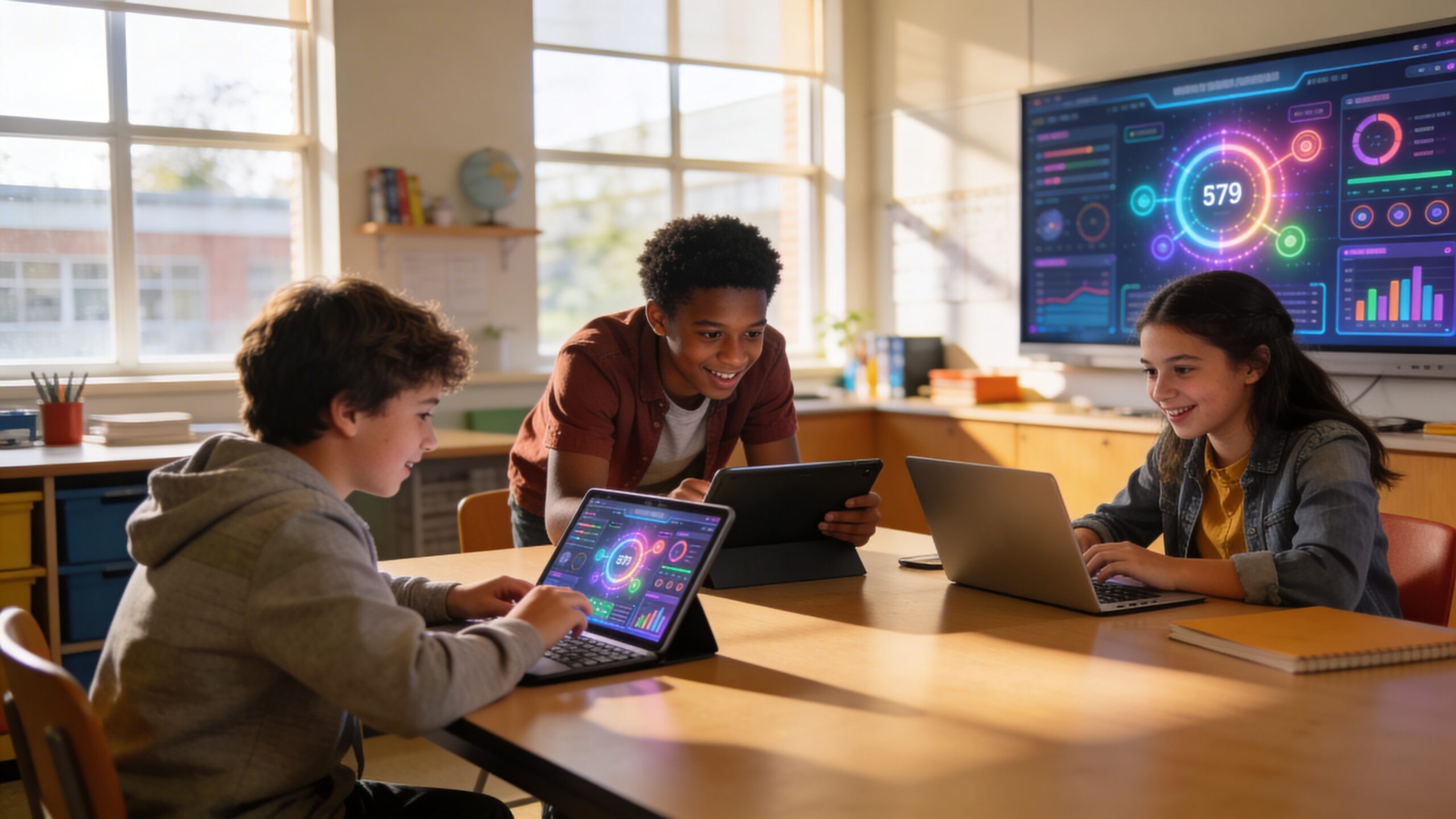
One of the most powerful aspects of gamification is the ability to make progress visible. In many traditional classrooms, students receive feedback only after completing major assessments. This delay can weaken motivation because learners cannot easily see the impact of their effort. Gamified learning environments provide constant feedback.
Progress indicators, advancement milestones, and evolving challenges help students understand exactly where they stand. This clarity strengthens persistence because learners always know the next step forward. Meaningful progression systems also emphasize mastery rather than simple completion. Instead of racing through assignments, students focus on improving skills over time.
When progress becomes visible, learning gains a sense of momentum. Students feel like they are moving forward rather than repeating static routines. This momentum plays a crucial role in sustaining motivation across long educational journeys.
The Role of Narrative in Learning
Games often captivate players through compelling narratives. Storytelling gives context to challenges, turning tasks into meaningful quests rather than isolated actions. Education can benefit from the same principle. Gamified learning environments sometimes incorporate narratives that frame lessons within larger missions. Students might explore historical civilizations, solve scientific mysteries, or build virtual ecosystems. Narratives provide emotional anchors that make information more memorable. Instead of memorizing facts in isolation, students experience them as part of a broader story.
This storytelling approach also helps connect knowledge across disciplines. Science, history, mathematics, and language can intersect within narrative-driven learning experiences. By weaving narrative into education, gamification taps into the brain’s natural affinity for stories, strengthening both motivation and retention.
Encouraging Resilience Through Game Mechanics
One of the most remarkable qualities of games is how they encourage persistence in the face of failure. Players routinely attempt difficult challenges dozens of times without losing motivation. This resilience arises because games frame failure differently. Instead of signaling defeat, setbacks become information that guides improvement.
Gamified learning systems replicate this mindset by emphasizing iterative progress. Students can revisit challenges, refine strategies, and gradually master concepts. When failure becomes part of the learning process, anxiety decreases. Students are more willing to take intellectual risks, ask questions, and experiment with new ideas.
Over time, this approach cultivates a growth mindset—the belief that ability develops through effort and learning. Resilience is not just beneficial for academic success. It is one of the most valuable life skills education can provide.
The Power of Social Learning
Gamification also strengthens motivation through social interaction. Humans are inherently social learners, and collaborative environments often accelerate understanding.Many gamified systems include cooperative challenges where students work together to solve problems or achieve shared goals. These experiences encourage communication, leadership, and creative problem solving. Students learn not only from teachers but also from one another.
Friendly competition can also enhance engagement when used responsibly. Seeing peers progress can inspire students to invest greater effort in their own learning journey. When designed thoughtfully, social dynamics transform classrooms into vibrant learning communities rather than isolated academic environments.
Technology and the Expansion of Gamified Education
Advances in educational technology have dramatically expanded the possibilities for gamified learning. Digital platforms can track student progress, adapt challenges in real time, and create immersive environments that respond to individual performance.
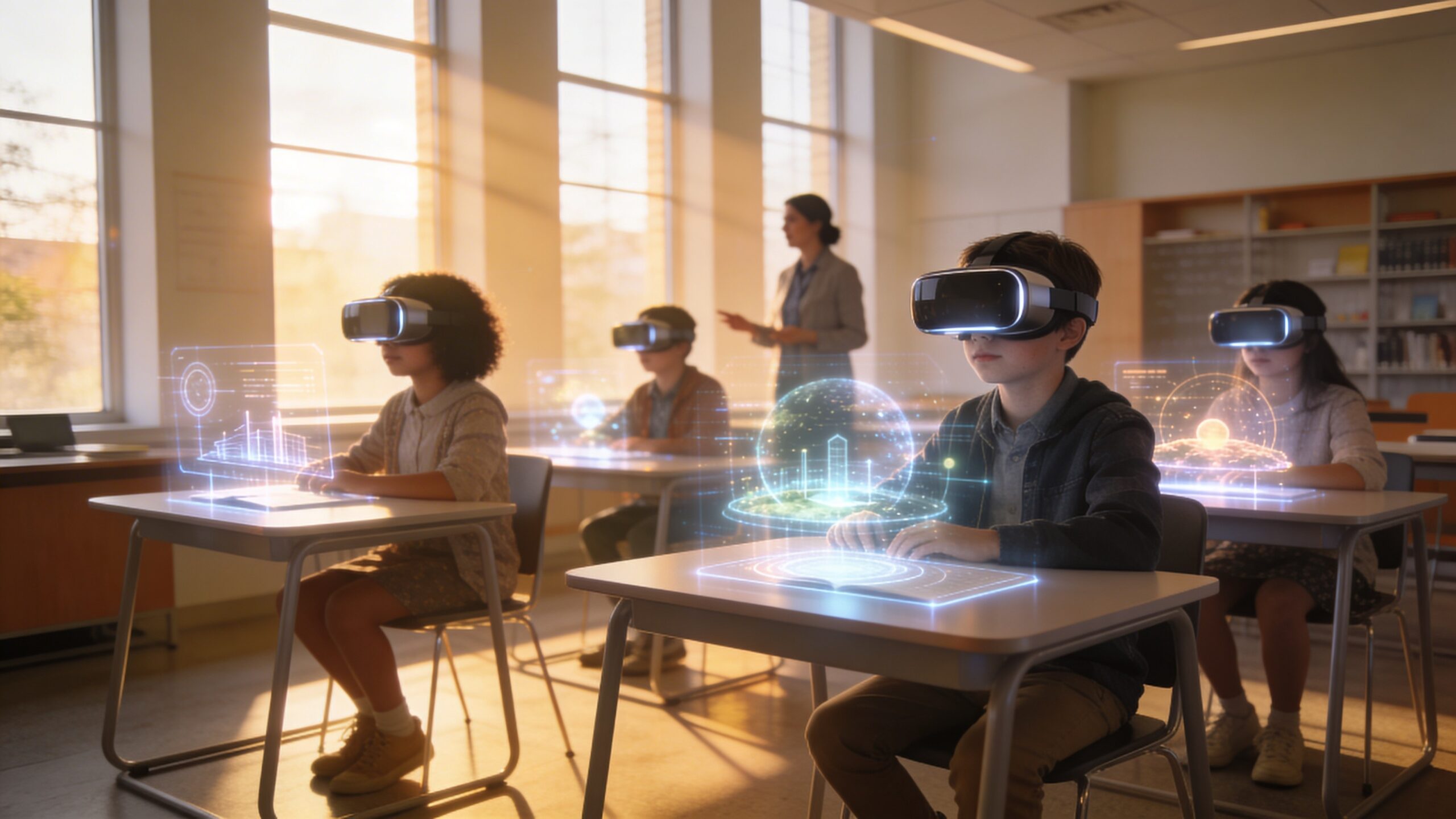
Adaptive learning systems, for example, analyze how students interact with material and adjust difficulty levels accordingly. This personalization keeps learners in an optimal challenge zone. Virtual and augmented reality are also opening new frontiers. Students can explore historical environments, conduct simulated experiments, or navigate complex ecosystems within interactive digital worlds.
These technologies amplify the motivational power of gamification by making learning experiences more dynamic and immersive. As digital tools continue to evolve, gamified education will likely become increasingly sophisticated and personalized.
Designing Gamification That Truly Works
While gamification offers enormous potential, its effectiveness depends on thoughtful design. Simply adding superficial rewards or competition can fail to produce meaningful engagement. Successful gamified learning environments focus on deeper motivational principles. Progress systems must reflect genuine skill development rather than arbitrary point accumulation.
Challenges should be carefully calibrated to maintain balance between difficulty and attainability. Too easy, and students lose interest. Too difficult, and frustration replaces motivation. Narrative elements should connect clearly with educational objectives, ensuring that storytelling enhances rather than distracts from learning. When designed carefully, gamification becomes an engine for curiosity rather than a gimmick.
The Future of Gamified Learning
As educational systems adapt to a rapidly changing world, gamification is poised to play an increasingly important role. The future of learning will likely blend traditional instruction with dynamic digital environments that harness the motivational power of games. Artificial intelligence may soon create fully adaptive gamified learning journeys, where each student’s experience evolves according to their strengths, interests, and progress.
Global collaboration platforms could allow students from different countries to solve challenges together, building cross-cultural understanding while developing academic skills. Ultimately, the goal of gamification is not entertainment. It is empowerment.
When students feel motivated, curious, and capable of overcoming challenges, education transforms from a requirement into a lifelong pursuit of knowledge. In that transformation lies the true promise of gamified learning.
How To Put The Idea Into Practice
The practical value of gamification and motivation appears when it changes what a learner does next. For a student using points, progress bars, challenges, or levels as part of a learning routine, the goal is not to admire the concept from a distance. The goal is to turn it into a small, observable learning move that can be practiced, checked, and improved. That may mean changing the study routine, redesigning a lesson activity, choosing a better tool, or giving feedback that helps the learner try again with more clarity.
A useful starting point is earning progress through retrieval, revision, collaboration, or problem solving rather than simple clicking. This keeps the topic connected to action instead of leaving it as a broad education idea. The activity does not need to be complicated. It needs to make the learner think, recall, compare, explain, decide, revise, or apply something in a way that can be seen. When the task creates visible evidence of understanding, teachers and learners can respond before confusion becomes permanent.
This matters across K-12 lessons, adult learning, compliance training, language practice, and online course engagement. Each setting has different constraints, but the same design question remains: what does the learner need to do with the idea after the explanation ends? If the answer is unclear, the lesson usually needs a stronger example, a shorter practice step, or feedback that points to the next improvement.
What To Watch During Review
The main risk is rewarding activity so heavily that learners chase badges without building durable understanding. That risk shows up when a lesson sounds convincing but does not improve recall, judgment, confidence, or performance. A strong review looks at learner behavior rather than surface polish. Did learners remember the point later? Did they make better choices? Did they ask clearer questions? Did they correct the same mistake less often? Those signs matter more than whether the topic felt familiar during the first pass.
Review also protects the article or course from becoming too thin. If the content only defines the term, learners may leave with vocabulary but no usable method. Better learning content explains the idea, shows why it matters, gives a realistic example, names a common mistake, and offers a way to test understanding. That fuller path helps the reader connect the topic to real study, teaching, training, or decision-making.
The final check is transfer. A learner has gained something meaningful when the idea can travel beyond the screen. They can use it in a new class, a work task, a study session, a planning meeting, or a conversation with another learner. When gamification and motivation supports that kind of transfer, it becomes more than an education term. It becomes part of how learning improves.
That is the standard worth using during revision: clear enough to understand, specific enough to practice, and useful enough to carry into the next learning moment.